
Syzygies
-
Posts
1,755 -
Joined
-
Last visited
-
Days Won
57
Content Type
Profiles
Forums
Events
Everything posted by Syzygies
-
GrillGuns: Designed to Sear Meat and light your Charcoal Grill Fun video, though that cheap cooker isn't doing their product any favors!
-
This is somewhat a commodity market, with no brands you'll recognize. There are however differences in the quality and width of the seal. My first two (one on each coast) were $30 units that eventually broke. I splurged and spent $100 last year on this 12" model: LinsnField Sealer Pro, Patented 12inch Impulse Heat Bag Sealer, 5mm Sealing Width I do think 12" is worth it (the space as much as the cost) even if one's primary application will be 8" stock bags. They all come with spare parts. Decide a permanent place to store these, and write that location on tape on the underside of the sealer. (I didn't, and I have no idea where these parts are.) They all benefit from a warmup: press once without a bag. There's a dial to adjust the heat. One might remember a setting for standard applications such as chamber vacuum sealer bags. They're great for sealing anything, such as half a bag of dried chiles from a Mexican grocer. The low settings do go low enough for truly sketchy bags, but one should test on parts of the bag you intend to later cut away. For sealing bags of stock, practice with water. First goal is to not drop the bag under any circumstances. Then learn to slide the bag up and down against a counter edge. Get all the air out from below the contact point, and let the liquid above the contact point slowly drain to below the contact point. Slide down to glom the entire bag together, then move over to the impulse sealer and seal. One would think one could do this on the sealer itself (I actually built a stand once to try to get the angle right) but the "glom" is not fragile, and it really is easiest against a counter edge. Moving the bag and positioning the bag on the sealer is another chance to spill the bag onto the floor. Be generous with bag sizing (one can cut the excess later) and this is less of a risk.
-
Me neither. But my next machine will be an oil pump. At least one can change the oil. And oil machines reach a better vacuum.
-
I forgot England is flat. Do you have any Scottish relatives? Of course, some Brits go to further lengths to escape the flat: The Boardman Tasker Prize for Mountain Literature If one wants to be selective about reading mountaineering literature, one can do no better than the writings of Peter Boardman and Joe Tasker, two Brits who died together attempting Mt Everest by an unclimbed route. A regular part of the ordeal of climbing at their altitudes is preparing hot food. It takes hours. As altitude increases, air pressure drops, so the boiling point of water drops. Food cooking in that water is held back by the boiling point effect from reaching a suitable cooking temperature. For example, sous vide chefs know that vegetables such as potatoes won't cook below 85 C. Above 4500 meters of altitude, the boiling point of water is below 85 C. Mt Everest and nearby peaks are nearly twice that altitude. As one might imagine, pressure cookers are popular. Just as at sea level, they can fail spectacularly. It is harder at altitude to run out and buy another. Chamber vacuum sealers achieve a near vacuum, for these purposes. Even "warm" water will come to a boil. This is a standard warning, if one studies sous vide cooking: Everything you need to know about vacuum sealing Now, if one wants to live dangerously, one can watch a pouch come to a boil as an oil-pump chamber vacuum machine works, and press seal immediately. There won't even be an air bubble, because the steam will collapse. Still, an impulse sealer is much faster. And, comfort is the only criteria for working hotter.
-
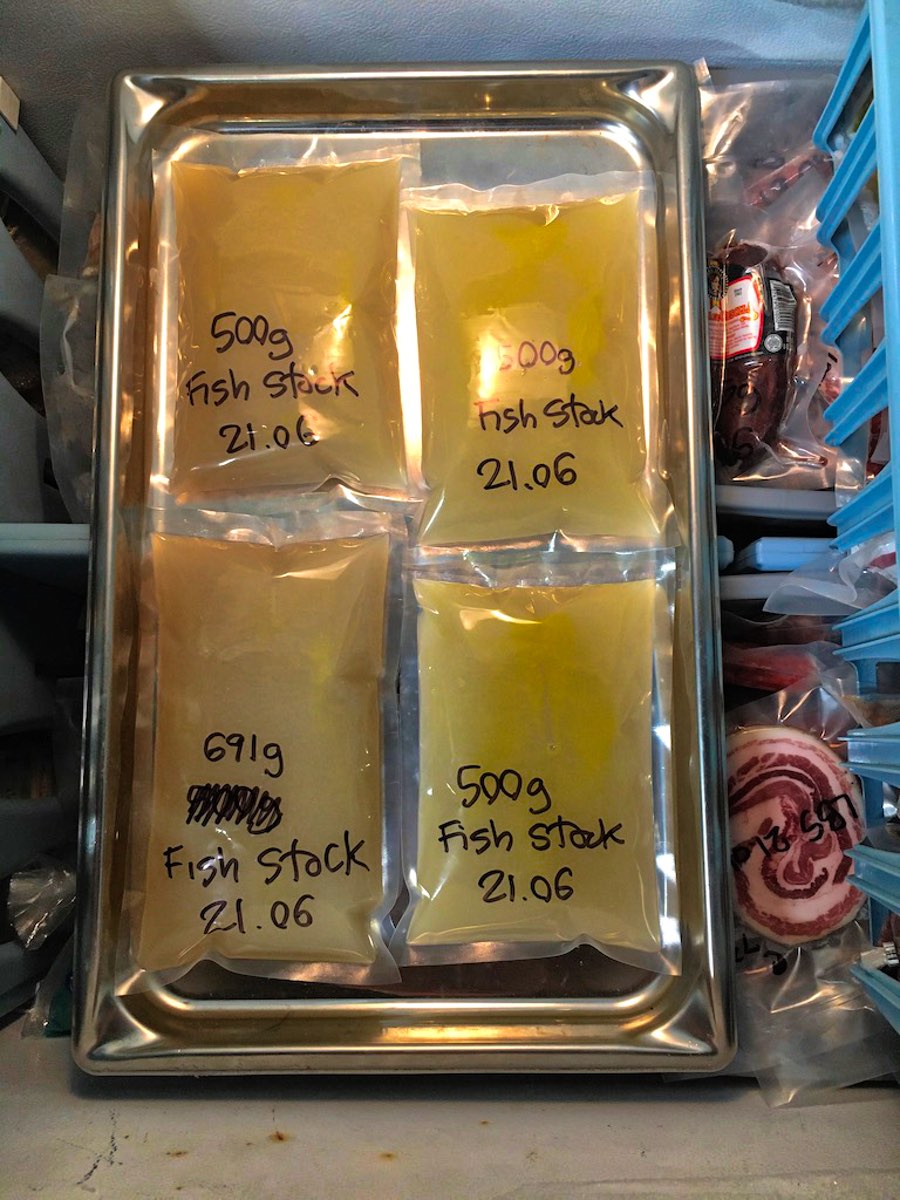
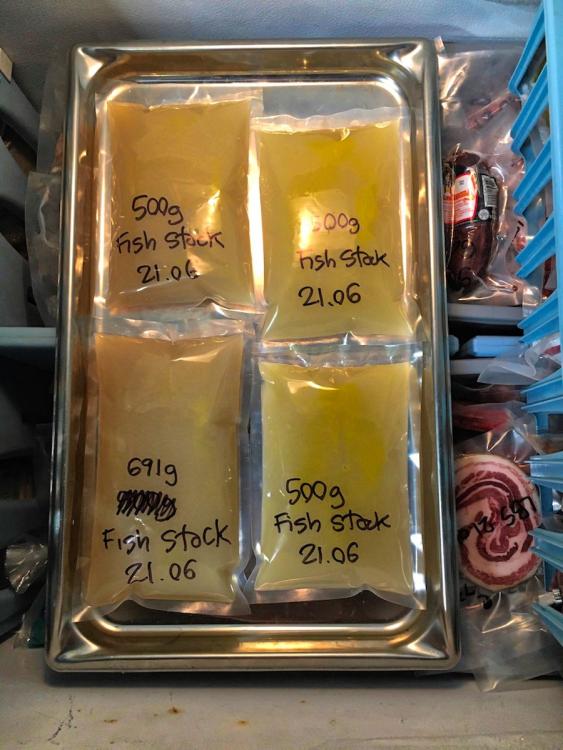
My bet is that your husband has some culinary training? It is standard in a commercial kitchen to chill all hot liquids before putting them away. At commercial scales, food takes too long to reach refrigerator temperatures, and it spoils. Not a possibility, a certainty. At home scales, one generally gets away without knowing this, and most home cooks don't know this. When I make 20 pints of chicken stock at a time, I'm at commercial scale. I always buy ice, and chill my stock in a serious ice bath before packaging. One might notice from my photo that I then set the stock packets in a recessed metal tray. I have a number of these that stack, staggered, in my chest freezer. The metal both conducts heat away from the stock packets, and separated the layers so that they all freeze at once. Chilled, I could use my chamber vacuum machine to seal these stock packets. The $30 impulse sealer is much faster.
-
I own a basic chamber vacuum sealer in each of two homes. The VacMaster VP210 would be the closest current model. When I replace either of these I will move up to an oil pump machine. I came from $400 external clamp machines; even the best can't begin to compete with a chamber vacuum sealer. Get 4 mil bags, rather than 3 mil bags. The extra expense is minimal, and they puncture less often. One still needs to protect sharp bones. Get longer bags than you think. It takes several inches of slack to guarantee a wrinkle-free seal. One can always cut bags that are too long. A major difference with chamber machines is that one cannot seal hot liquids. They will boil as the air pressure drops, fouling the pump. For an oil pump, one then changes the oil. For a "maintenance-free" pump one sends in the machine for service. There's a third category of machine not to be overlooked: A $30 impulse sealer. One can easily learn to burp the air out of a bag of liquid, glomming together the sides of the bag the way one sticks a wet film to a window, then seal the bag with an impulse sealer. This is how I'll put away twenty pints of stock at a time, in pint bags. When I read in cookbooks other ways to freeze stock, I cringe. They really haven't figured it out yet, huh.
-
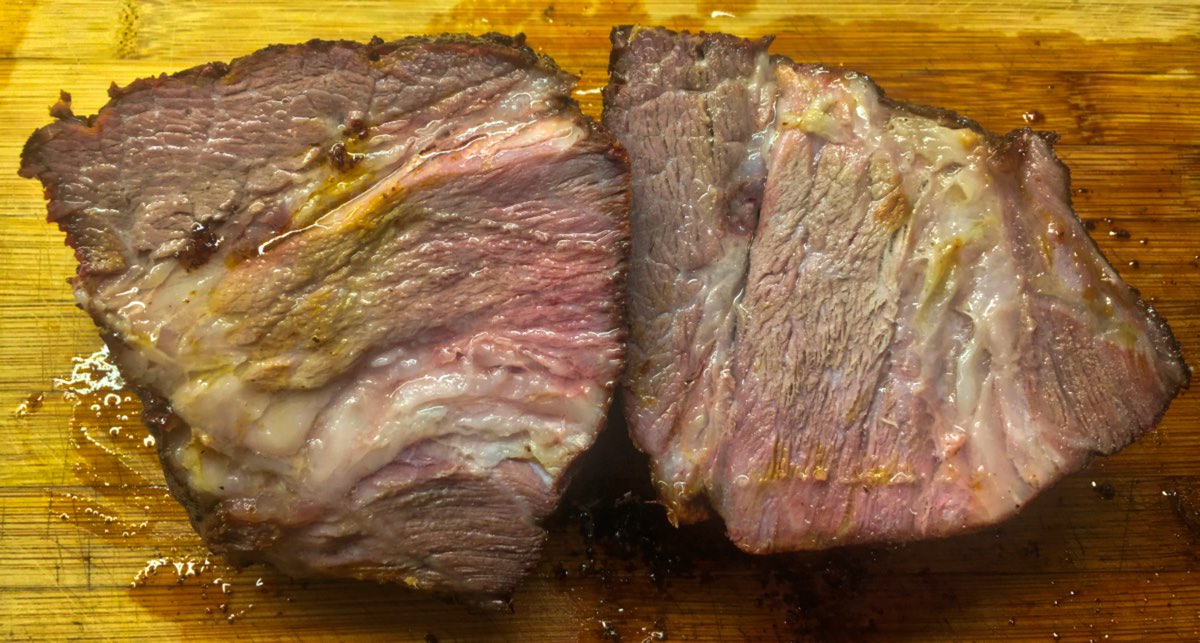
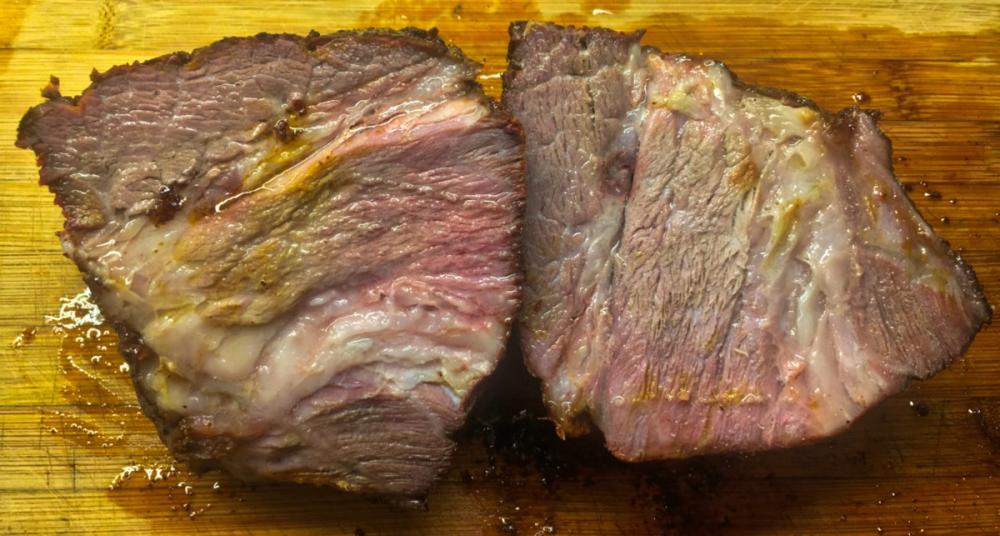
I bought that cut at a Farmer's Market. $20 a pound. First try, I barely did it justice (I'm used to whole bone-in pork butts, or the butt+picnic shoulder as one piece), but it was great.
-
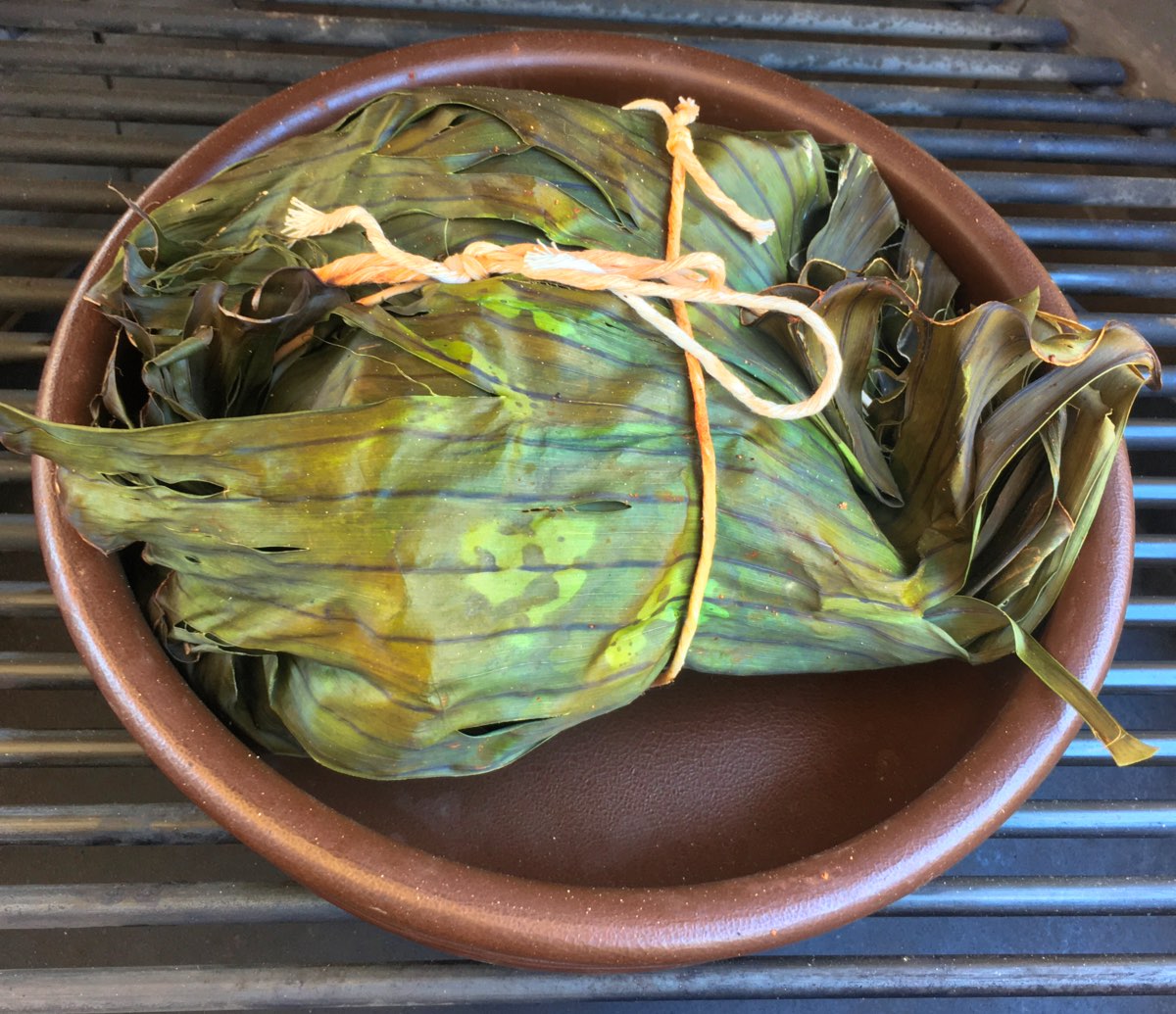
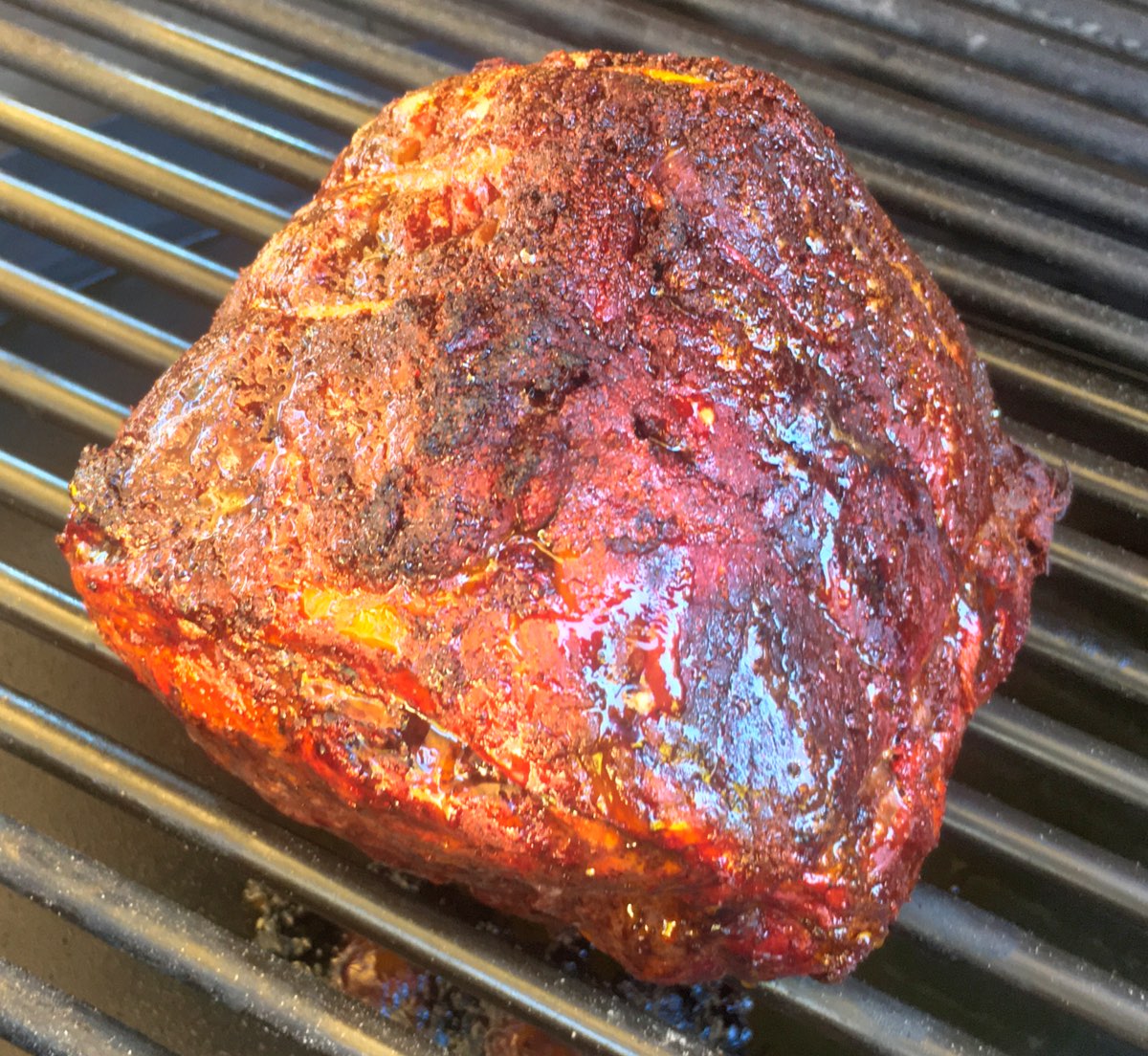
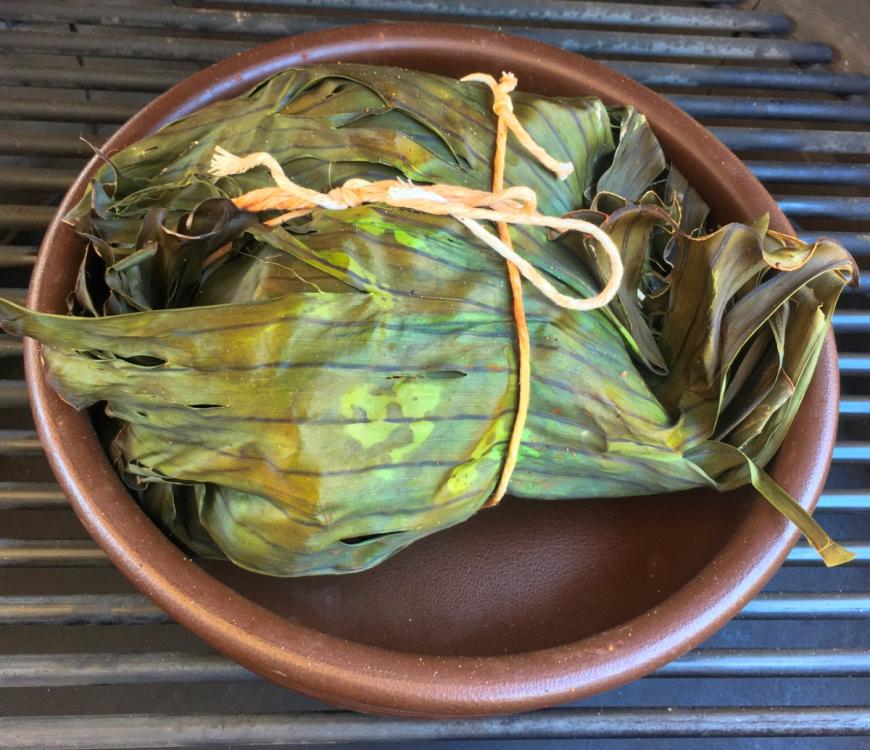
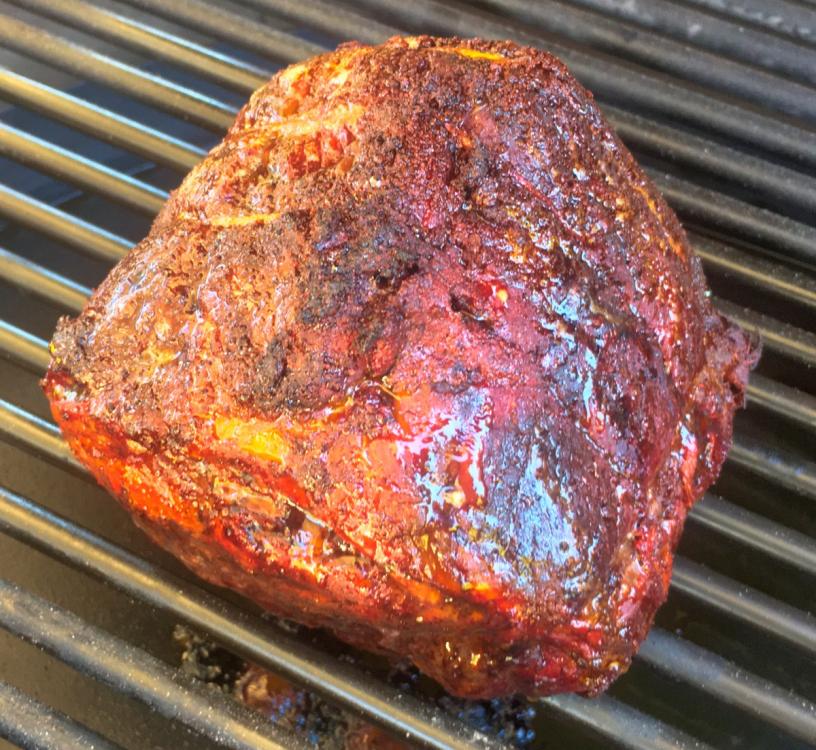
First experiment with tacos from Cochinita Pibil. At its simplest, Yucatan roast pork in a marinade of achiote seeds and orange juice, wrapped in banana leaves. Recipes get way more complex. I can find fresh banana leaves at a Mexican grocer in town. Fresh as in not frozen. Asking my Mexican neighbor, the leaves are very pliant off the tree. My leaves disintegrate on touch. One doesn't expect to wrap a liquid-tight vessel. The leaves do insulate. Following a standard recipe, the pork butt wasn't close to done. I unwrapped it and cranked up the heat for a few hours. The pork is the only Iberico pork raised in California. I had to try it, and it was delicious. It will become a regular thing. Encina Farms
-
What drip pan? KK sells a double bottom drip pan, to lessen this effect. While one never needs to use a "water pan", a brisket might survive having some water in the drip pan, which might last enough of the cook. This is an experimental question. I've found that enough salt to properly brine or dry rub my meats makes the drippings too salty to use. Forced to choose, I like the effect of the salt on the meat, and I give up on the drippings.
-
Yep, I have their blower, and their self-propelled lawnmower, which came with 2.5 amp hour and 7.5 amp hour 56v batteries, respectively. I crave their POWER+ NEXUS PORTABLE POWER STATION as a generator alternative. The lawnmower is great. I only ever use their blower with the turbo button held down; I wish it locked. It wouldn't be suitable for encouraging fires at the scale I cook. I already have a full set of Milwaukee batteries, chargers, and tools, so the feeble Milwaukee blower fit well into my routines. They also make an awesome tire inflator, with all the smarts one could only daydream about decades ago. I tossed the dated 12V inflator I used to use. As a junior counselor I was left with campers on an Adirondack lake beach, while the counselor left with a camper who needed medical attention. It's unlikely that would be the protocol today. We got bored, and a camper suggested burning a giant tree stump (perhaps 6' cubed) on the sandy beach, far from anything else that could burn. We succeeded. A forest ranger appeared by motorboat, not pleased.

-
There's a sweet spot for one's tendency to change, and I'd agree that many people fall on the conservative side. I perhaps fall too far on the other side; it takes great discipline for me to do anything the same way twice. Even making a meal I've cooked dozens of times, I'll recall a pair of approaches I've seen others use and test them once again against each other. My wife was concerned, marrying me, because I'm generally so episodic and volatile. Computer programmers love to debate programming languages. One learns to avoid such debates unless everyone in the discussion has mastered both languages under consideration. I do believe that I've tried every method of lighting fires. That I've lost interest in further experiments is startling. I believe that I understand the problem. For comparison, various people use my smoke pot. They didn't see the experiments. Some of them were pretty scary. There are going to be many optimal approaches to lighting fires, because everyone has a different "cost function". One trades effort for time. The easiest approaches take longest for the fire to be ready (ok, I'm home) but also have the least predictable window where the fire is perfect for grilling (not ok). However one lights a fire, then using a cordless blower goes a long ways toward eliminating unpredictability as to when the fire will be ready.
-
An aphorism I heard long ago (from David and Kim, old-timers here might remember them) was that a full cooker is a happy cooker. One doesn't use a water pan with a ceramic cooker, but there is a sweet spot for the ideal cooker humidity. A full cooker is said to naturally find this sweet spot. On the other hand, aphorisms aren't gospel. They're memory aids, and I don't remember if this one is true. My spreadsheet tells me that I cooked 38 lbs of pork butt once in my 23" KK. That's pushing it, but it came out great.
-
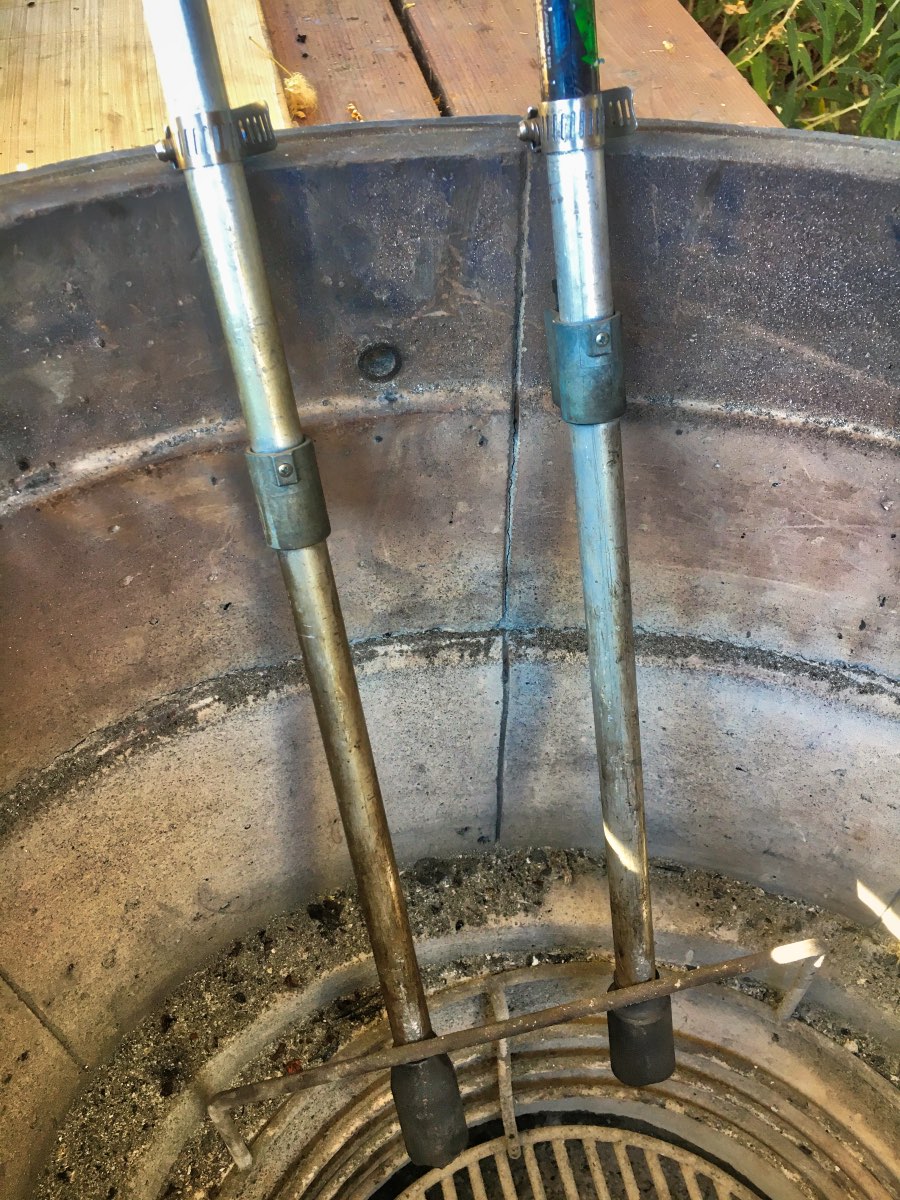
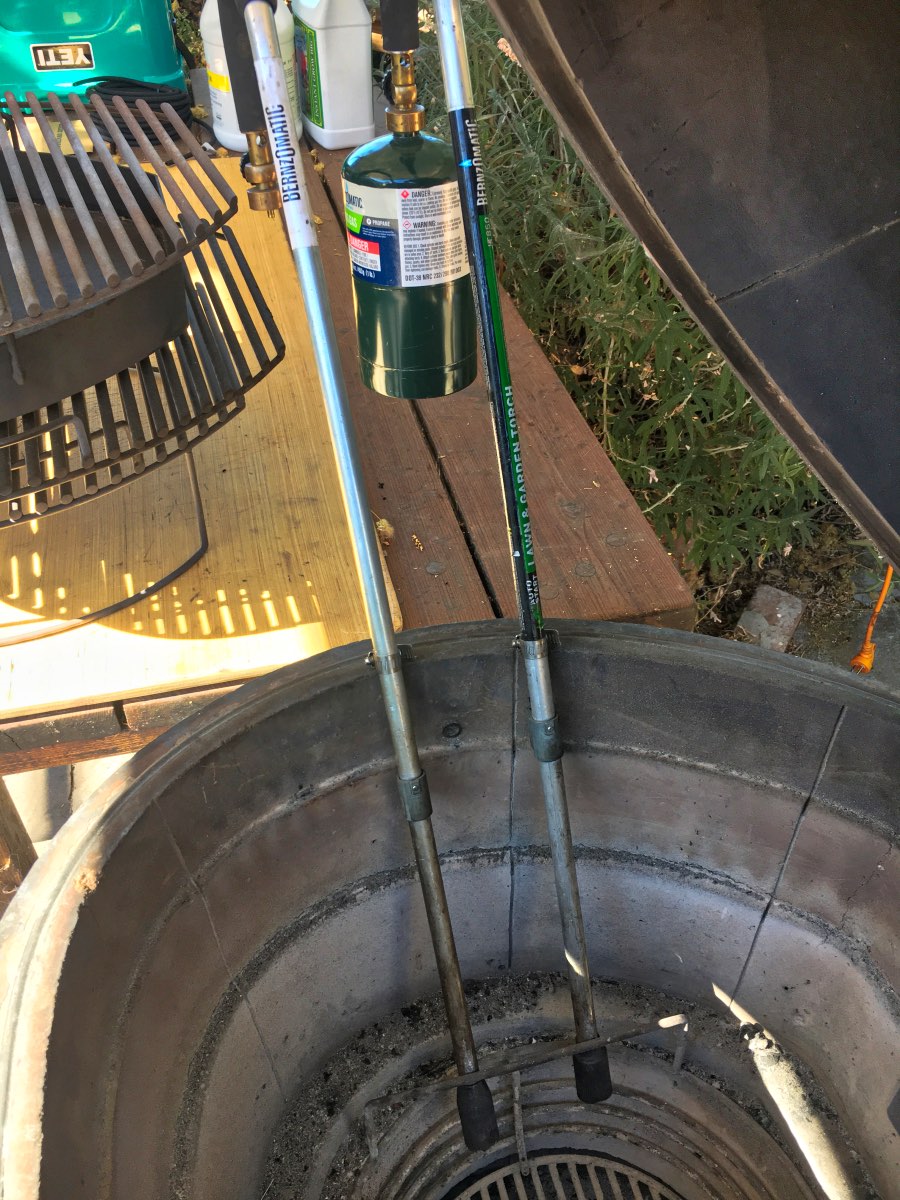
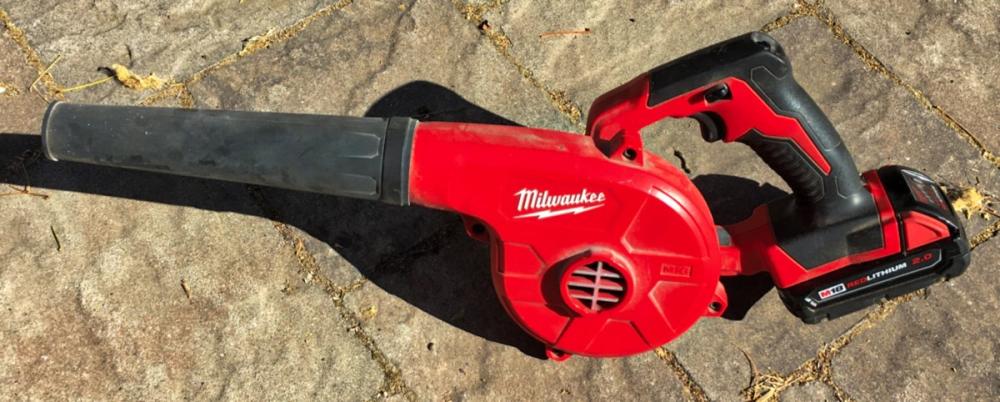
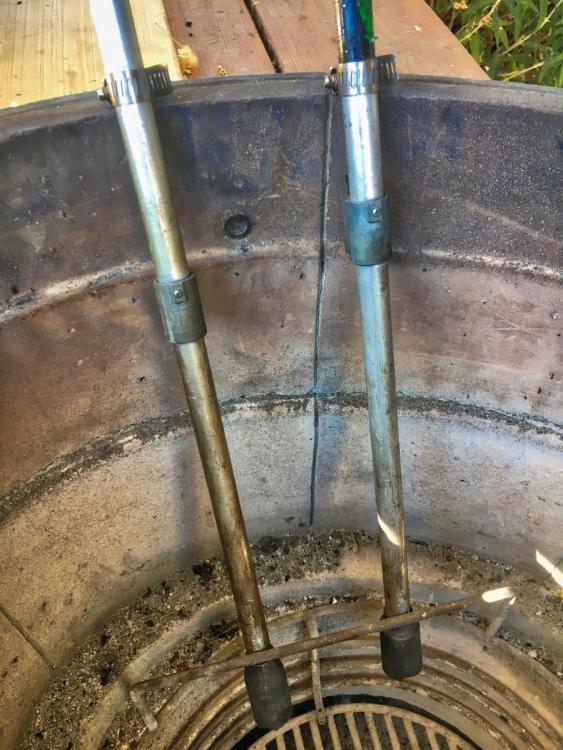
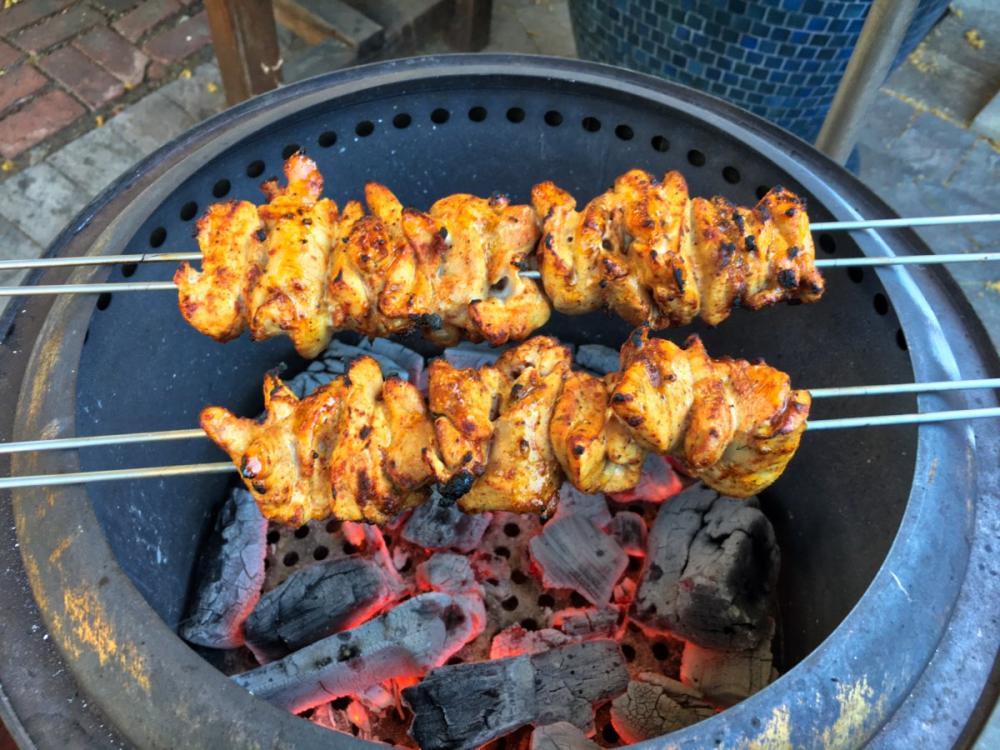
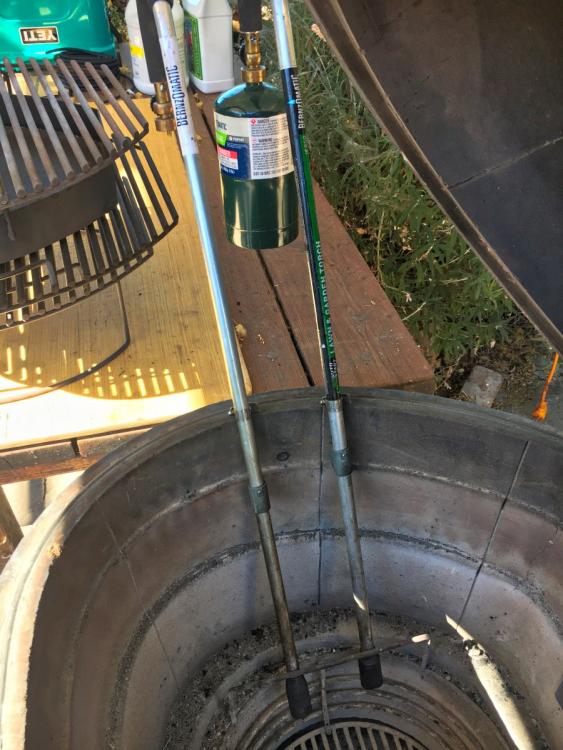
I use a camera! By fixing a hose clamp onto the neck of a weed burner, one can prop it in lighting position, to leave it briefly unattended. When my first weed burner stopped lighting, I bought a second one, figuring I could light one off the other. Alas, I still haven't figured out why the first one won't light! Shown is the Milwaukee cordless blower, which accelerates any fire once lit.
-
I use a weed burner, with a hose clamp on the neck so I can rest it against the KK lip, wedged under a charcoal basket handle, and walk away. My first weed burner "died" when the igniter failed. Perhaps a repair one could manage, but instead I bought a second one. You only need one to light, the rest can light off the first one. Now I can wedge two weed burners on opposite sides, come back a bit later to move them... Once fire is started where you want, the blower takes over. The Milwaukee cordless blower, feeble for serious work, is perfect for fires.
-
Vermicular Cast Iron Induction Cooker
Syzygies replied to PVPAUL's topic in Relevant Product Reviews
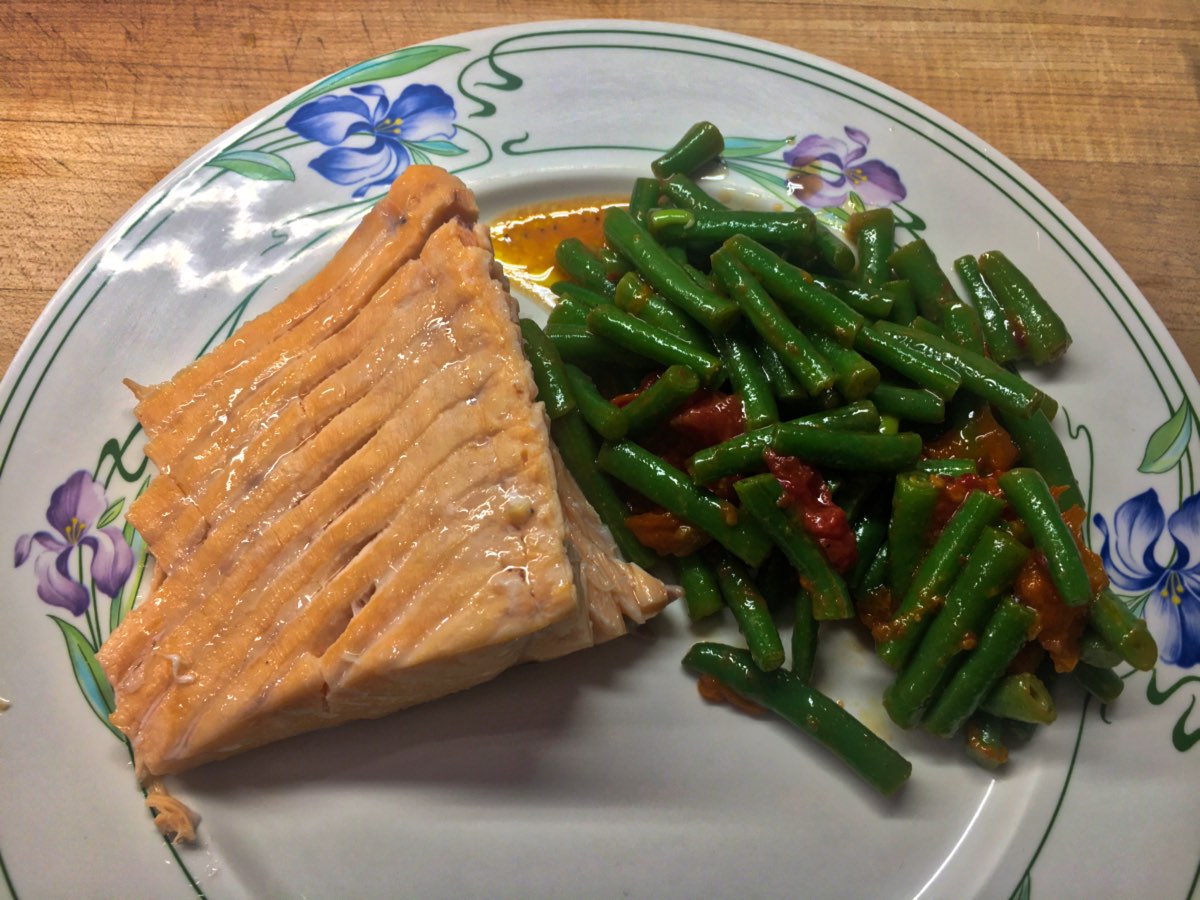
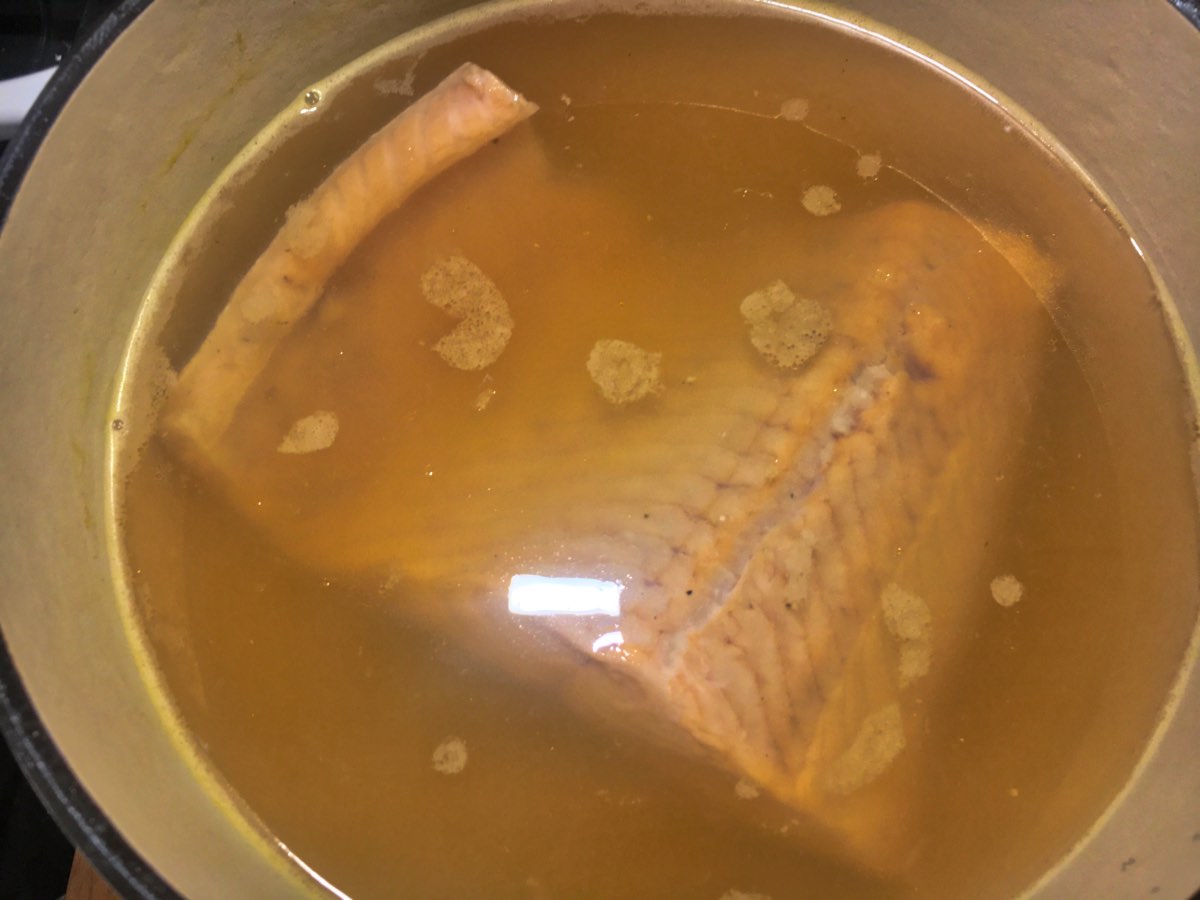
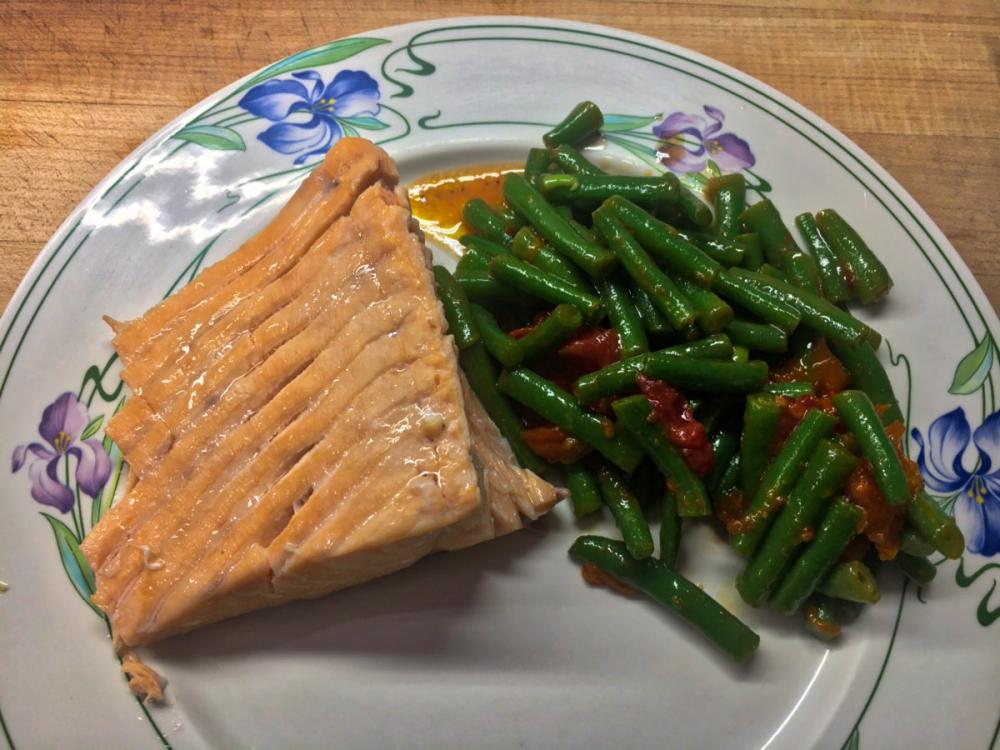
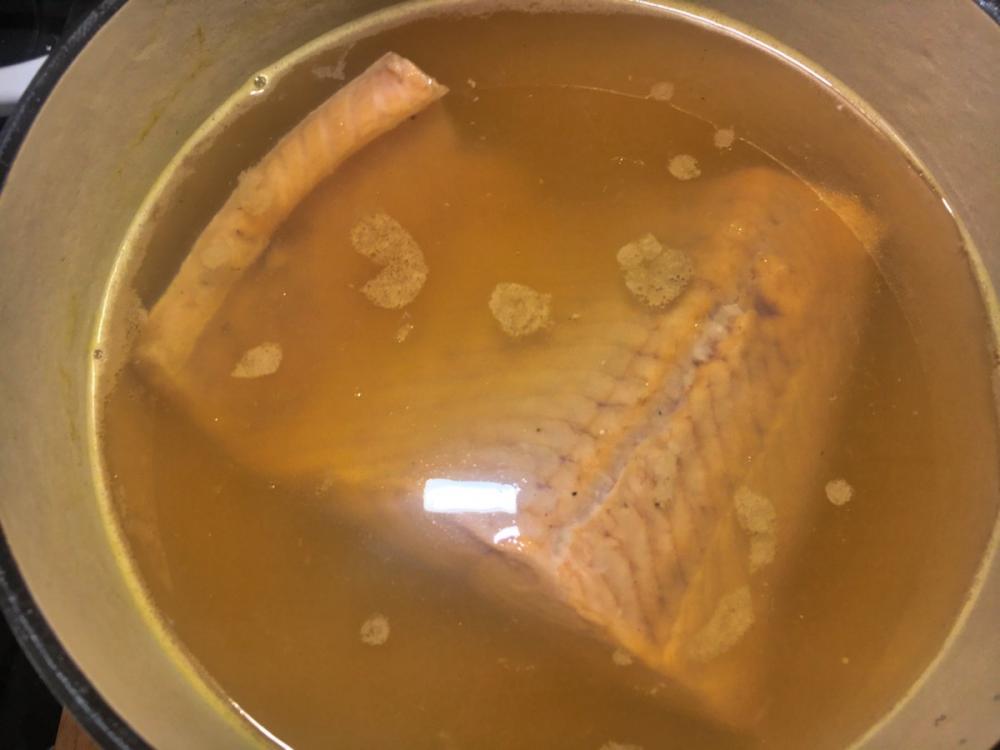
So 106 F here, second day in a row, and a spare the air day also. Our usual way to cook salmon is to brine it, then smoke it in the KK in a cazuela over a bed of basil. Too hot outside... We're finding more uses for the "indoor K" Musui Kamado. I bought their white Dutch oven so Laurie could see ghee cook. So why didn't I realize before today it's a perfect "court bouillon" cooker for fish? Court bouillon is such a classic French technique that it has fallen from favor. I don't know why. Using the Thermapen, and aiming for 125 F internal temperature in a bath held at 200 F, this was spectacular.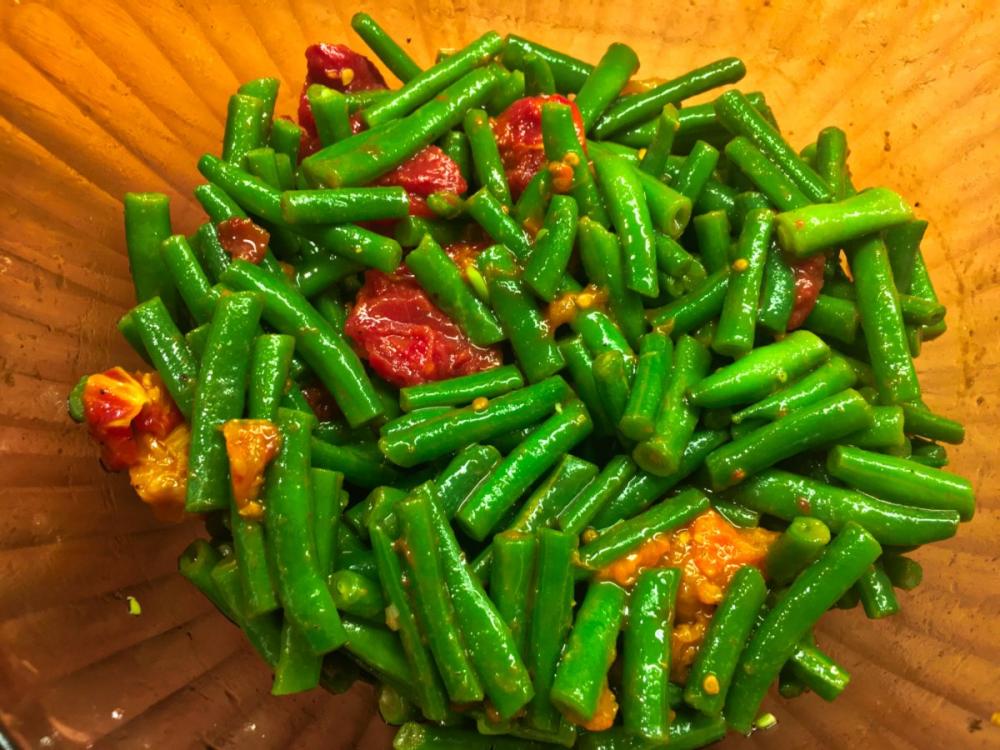
-
BernzOmatic Lawn and Garden Torch Affectionately known as a weed burner. Anything in the category will work. Many of us use these to start our fires. It's particularly useful for dense charcoals such as KK extruded coconut, and for aiming where the fire starts, such as under a smoke pot. I first saw something like this used by @jiarby in a 2003 cooking competition (the judges refused to decide whether his chili or my gumbo was better). He had a more substantial flame thrower, more like something Arnold Schwarzenegger would use in Commando. An innovation I'd recommend is to add a hose clamp somewhere on the neck of the flame thrower. Then it can rest on the lip of the KK, leaning also against the top grate of the charcoal basket. Now you can step away to refill your wine. When the igniter fails, keep the old one so you have two at once. Dennis notes that once a fire starts, it needs more oxygen, not more heat. He used to recommend a hairdryer until I posted that I loved the Milwaukee cordless M18™ Compact Blower. To be clear, this blower is anemic for any other purpose. My favorite cordless blower uses my lawnmower battery. This blower is however worth the price just for starting fires, particularly if you already have Milwaukee cordless tools.
-
Basket splitter/half grate config
Syzygies replied to Jose Prieto's topic in KK Features & Accessories
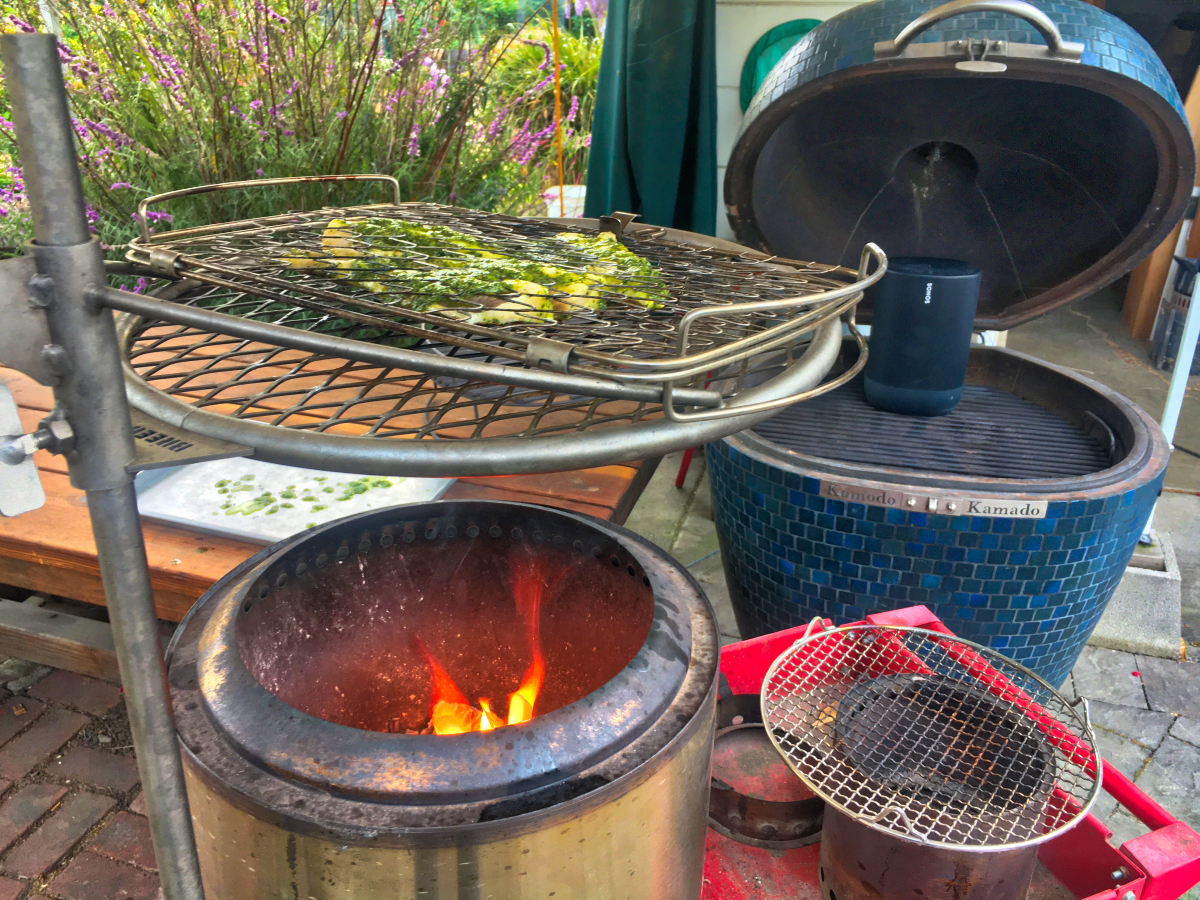
I'm on a 23. The basket is circular, and can rotate to any angle. I chose fire in back for this cook, so the fish would be in front, not dripping into the fire. -
Basket splitter/half grate config
Syzygies replied to Jose Prieto's topic in KK Features & Accessories
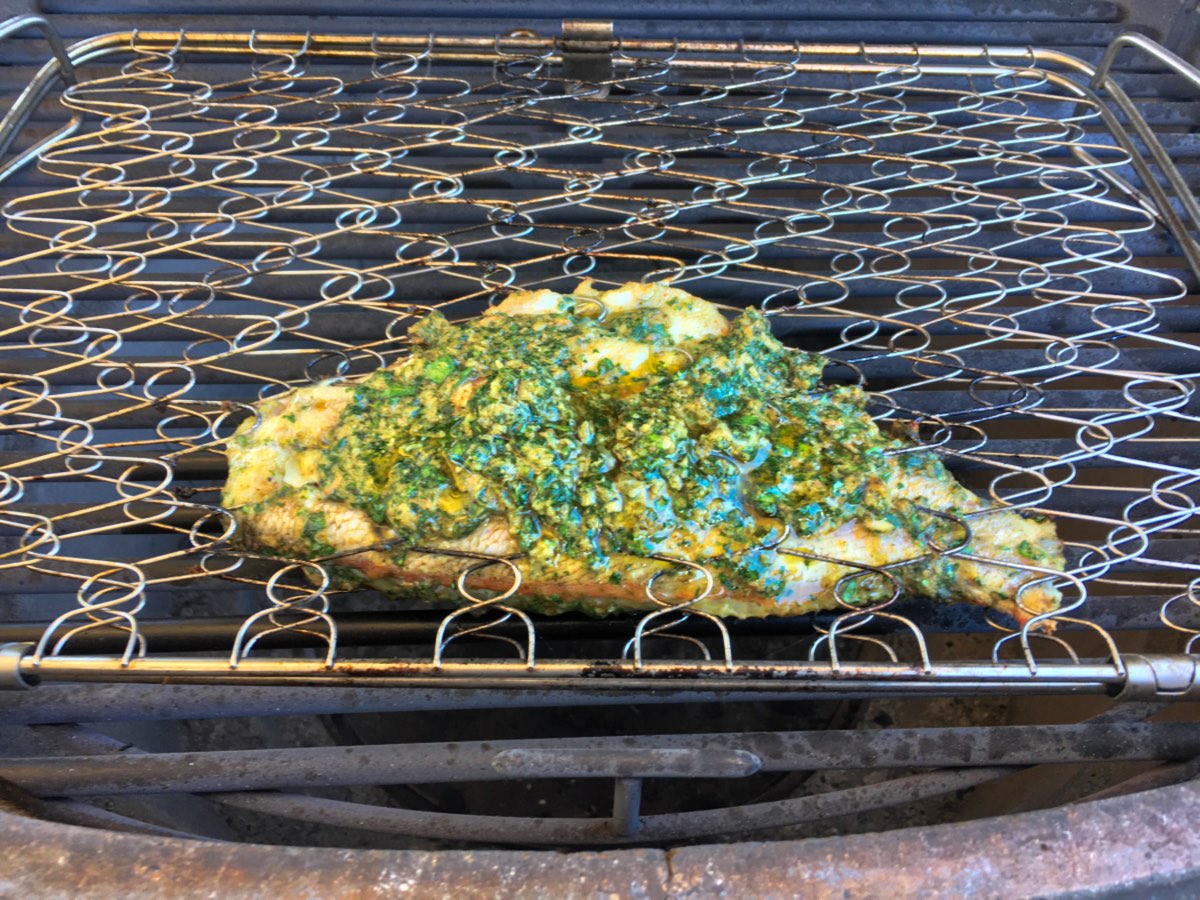
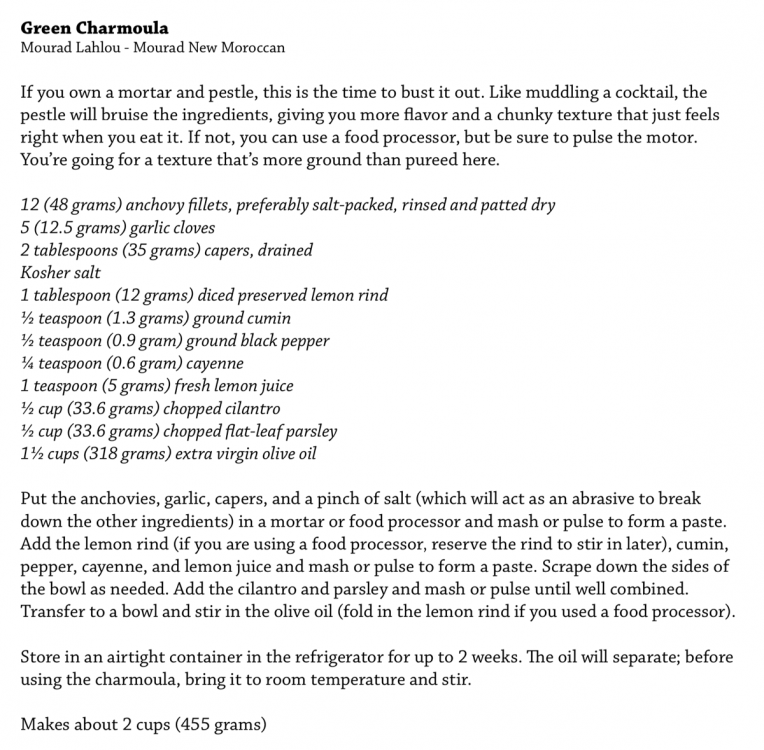
Weber Large Grilling Basket "Baked" fish with charmoula sauce is a perfect application for a KK with the basket splitter. Show is a whole red snapper, with some identifying features trimmed for wife acceptance, marinaded baked and sauced with a half recipe of green charmoula. An olive oil marinade will flare up in any direct setup, such as my favored Solo Stove for quick grilling. This depresses me. It reminds me of "Weber" chicken that tastes mostly of burned fat. Worse, if I'm asked to do the grilling as a guest, but the flareups can't be avoided. Here, one gets charcoal grilled flavor while baking indirect, with no flareups. To be fair, bad cooks burn their food, good cooks live in fear of burning their food, and great cooks walk up to that edge. I've seen French cooking accounts where one wants to reduce but not eliminate flareups. Still, what I've done here is a compromise I can accept. With the KK I can phone in better food than I can afford at a restaurant.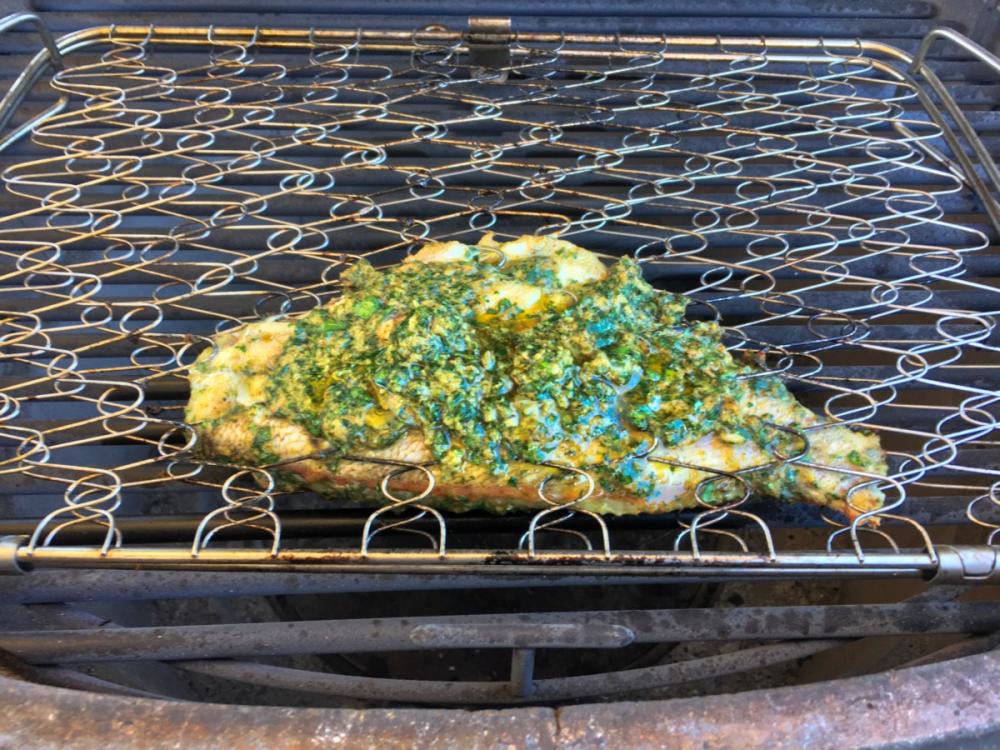
-
Vacuum sealer recommendations
Syzygies replied to Takamatsu John's topic in KK Features & Accessories
Second. Over the years I owned various top-of-the-line FoodSaver external clamp vacuum sealers. They're a classic business model: Average quality, extraordinary customer service for casual users. If you look at their prices as warranty period rentals, and their machines meet one's casual needs, fine. I also owned several best-of-category external clamp vacuum sealers, an Italian brand no longer made that I deliberately chose over the Weston models. Somehow Weston gear reminds me of survivalists; it certainly looks more like it was built in someone's garage. I believe that they work well. I don't have direct experience to make the comparison, but were I choosing now in this category I'd probably go with the Cabela's Commercial-Grade Vacuum Sealer. One huge advantage of an external clamp vacuum sealer is that the bag size is only restricted by width, not length. For a whole brisket that matters. Another advantage is hot liquids, if one can avoid destroying the machine. Hot liquids will come to a boil and ruin the pump on an air pump chamber machine. With an oil pump chamber machine one can change the oil. Still, better to remember to only use chamber machines on cold food. I can't conceive of going back to an external clamp vacuum sealer, after owning a basic chamber vacuum machine. It's like going from an "egg beater" hand drill to a good cordless power drill. I own a VacMaster VP115 and VP120 (for two kitchens), both replaced by newer models. What held me back from the oil pump models was the weight more than price; I'd go with an oil pump next time, and consider other brands. An external clamp machine might drop air pressure by 10% (that's being generous), enough to get the bag to clutch the contents. A chamber machine drops air pressure by at least 80% (and this is for low end models). Scale matters. One can add steam while baking bread by spritzing in 10g with a plant spritzer, or one can boil off 300g of water, displacing the oven atmosphere several times over, using 30 lbs of metal as thermal mass. Scale matters. The pandemic has converted friends to chamber machines, as they stockpile hard-to-obtain foods in their freezer. We have a large chest freezer. At this point it's scary to see a textured clamp bag, because that dates it as too old to conceive of eating. However, in the transition we observed that chamber vacuum sealed foods kept much longer than external clamp vacuum sealed foods. After a year or two the textured bags look like they'd been put away in Saran wrap, and we'd discard them without checking the date. After four years a chamber vacuum sealed bag looks like it was frozen yesterday, unless it developed a leak by banging around. Sometimes we discard them because we've lost our nerve. When we use meats frozen this long, they're a bit subdued but fine. I'm reminded of a story I heard as a kid of a fancy dinner where 30,000 year old mammoth meat was served, found in a glacier. It tasted like mud. But that's 30,000 years stored in a glacier without proper dressing, not four years in a chest freezer. Chamber bags are much less expensive that the textured external clamp bags, though it doesn't seem so for initial stocks as one tends to buy 500 at a time. One can always cut longer bags, and one does need some slack so the part of the bag that seals isn't under tension. I strongly recommend 4 mil bags over 3 mil bags. One can also buy bone protectors to prevent leaks, or just make them as needed from smaller bags. Once one has chamber bags, spend the $30 on an impulse sealer, for sealing wet mixtures and liquids, a challenge for any vacuum sealer. One doesn't need a vacuum for liquids, the liquids do the work! I routinely burp the bubbles out of a 500ml (6" x 10") bag of chicken stock, by sliding the bag along a counter edge till it gloms tight, then seal. Impulse sealers need a dry run to warm up. I'll put up 16 bags of chicken stock at a time, to freeze for routine use. If I want less stock, for a French sauce or a Chinese stir fry, I'll thaw the bag in a sous vide bath, nick the corner, pour out what I need, and reseal using the impulse sealer. -
We were all having scary thoughts about the Cleaver showing up on the veranda!
-
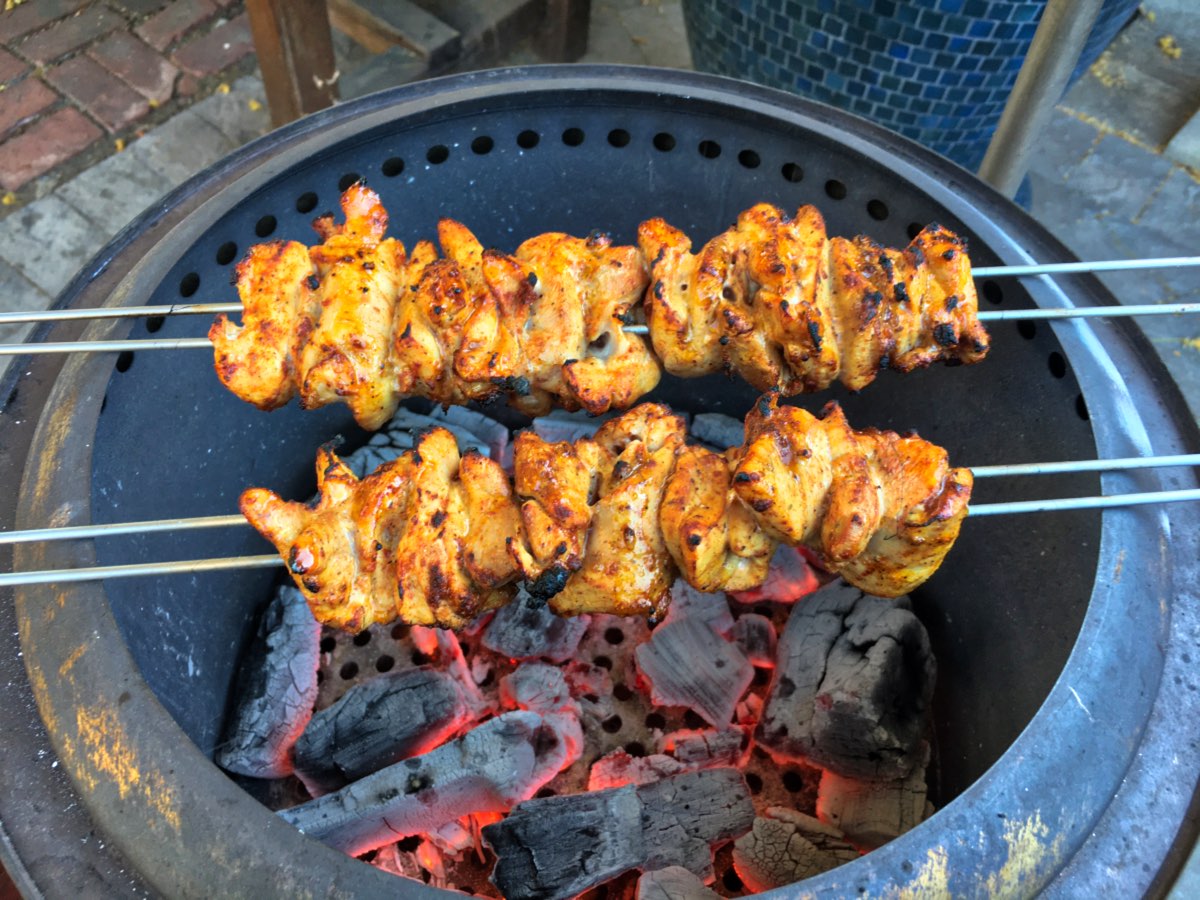
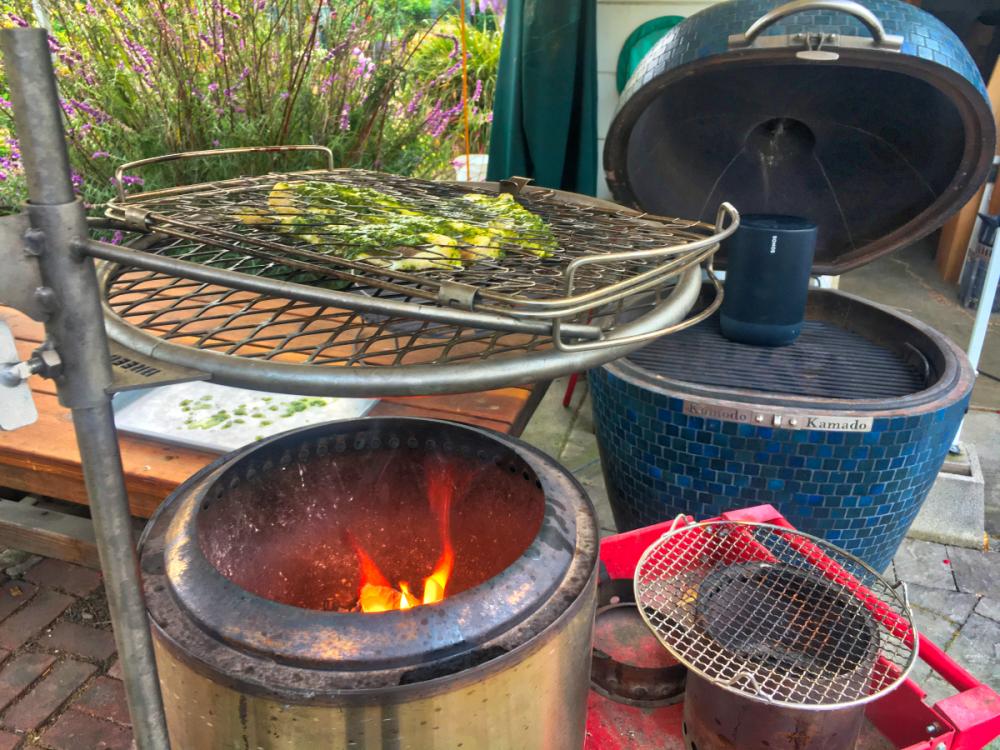
I'm a fellow 23" Ultimate owner. The KK is my charcoal burning oven with a lid. Tandoor, pizza, roast meats. I've fed barbecue to crowds of up to 100. At a certain scale the 32" would be handy, but I've always been happy with my 23". I'm actually not sure that I'd swap it for a 32" if I won the lottery, though I do understand the 32" appeal. "Reverse sear" is just standard sous vide restaurant, in the local dialect. For quick grilling, such as after sous vide, or to roast peppers and salsa ingredients, or charmoula fish (shown) I always use a Solo Stove. Shown is a hybrid rig on a Harbor Freight cart, with a Breeo adjustable height grate. Here's a forum thread: Solo Stove
-
Nixtamal / masa / tacos from Masienda Oaxacan corn
Syzygies replied to Syzygies's topic in Techniques
Wow, great idea. Every time I feel insecure that I'm just not as committed as tekobo, I think back on the Tomato estrattu dehydrator I built a couple of summers ago, and I relax. We love to sous vide potatoes (cold water to 185 F = 85 C for up to two hours) then chill them, then dry them before browning in ghee. The dehydrator is great for the drying step. Making my own masa harina? Wow. -
FinaMill - next new cooking toy/tool?
Syzygies replied to jeffshoaf's topic in Relevant Product Reviews
Not exactly what you asked for, but a good sauce one can buy, a spectacular sauce one can make: Roasted Chilli Paste – Nahm Prik Pao The recipe is by my Thai cooking teacher, now retired. I took every weeklong intensive she taught in Oakland, and traveled for a month in Thailand on one of her food tours. I even repeated one of her weeklong intensives: several people dropped out, and she invited me out of fear that without another set of fast hands the classes would go too deep into the evenings. She's very direct: Introducing me to everyone, she explained that I would be leaving if one absentee showed up, as the woman in question found me an acquired taste. Somehow this made liking me a matter of pride; I got along famously with this group. The recipe isn't as hard as it looks, and the paste is astounding. -
My favorite California farmers market source for lamb raises Dorper Sheep, from South Africa. A "hair" sheep optimized for meat, rather than a "wool" sheep. Apparently the wool production of wool sheep introduces gamey notes to the meat. This guy ("Farmer Shep") doesn't finish on grain. On the contrary, he's also experimenting with moving his pigs through the family walnut orchard, fast enough to not destroy the orchard. This is in the spirit of Iberico pigs in Spain, allowed to forage a diet of acorns, oak, and nuts. This is my single best meat source, in either California or New York. One is not restricted to corporate practices. Taste aside, I am ethically uncomfortable with mass-produced meat.
-